
Manaslu Circuit Trek
If you want to experience the Himalayas beyond the most famous trekking routes, the Manaslu Circuit could be a great journey to consider.
- Duration
- 18 days
- Max elevation
- 5,106 m
- Difficulty
- Moderate to challenging
- Price
- On request
Route altitude profile
Gorkha region
Machha Khola to Larkya La Pass, via Deng and Namrung
Route altitude profile
Highest point: Larkya La Pass · 5,106 m
Scroll to see the full altitude profile.
- Route stop
- Pass or day visit
- Shaded area: above 3,500 m
Several points on the same day show places visited that day.
Arrival in Kathmandu (1,350 m)
- Our team will meet you at the airport and transfer you to your hotel.
- Settle in ahead of your Manaslu journey.
- Road distance: 5.5 km | Duration: 20 minutes
Sightseeing and trek preparation (1,350 m)
- Spend the day in Kathmandu, with time for sightseeing and trek preparation.
Drive to Machha Khola (900 m)
- Travel by private Jeep from Kathmandu to Machha Khola.
- This is the road journey to the start of your trek.
- Drive distance: 160 km | Duration: 7–8 hours
Machha Khola to Jagat (1,410 m)
- After breakfast, begin walking from Machha Khola to Jagat.
- The route includes both ascent and descent as you continue into the Manaslu region.
- Walking distance: 18 km | Duration: 6 hours
- Ascent: 740 m | Descent: 90 m
Included meals: Breakfast, lunch and dinner with tea or coffee.
Jagat to Deng (1,850 m)
- After breakfast, continue from Jagat to Deng.
- This is a longer walking day on the circuit.
- Walking distance: 20 km | Duration: 7 hours
- Ascent: 550 m | Descent: 80 m
Included meals: Breakfast, lunch and dinner with tea or coffee.
Deng to Namrung (2,650 m)
- After breakfast, trek from Deng to Namrung.
- Today’s route gains height as you travel further into the Himalayas.
- Walking distance: 20 km | Duration: 7 hours
- Ascent: 1,120 m | Descent: 240 m
Included meals: Breakfast, lunch and dinner with tea or coffee.
Namrung to Lho/Shyala (3,180 m) / (3,520 m)
- After breakfast, continue from Namrung towards Lho or Shyala.
- The day’s destination follows your agreed itinerary.
- Walking distance: 10.5 km | Duration: 4–6 hours
- Ascent: 600 m | Descent: 70 m / (Ascent: 940 m | Descent: 110 m)
Included meals: Breakfast, lunch and dinner with tea or coffee.
Lho to Samagaon (3,530 m)
- After breakfast, continue the trek to Samagaon.
- An acclimatisation day follows before the route takes you higher.
- Walking distance: 10.5 km | Duration: 4 hours
- Ascent: 570 m | Descent: 190 m
Included meals: Breakfast, lunch and dinner with tea or coffee.
Acclimatization day in Sama Gau (3,530 m)
- Spend an acclimatisation day in Sama Gau.
- Day hike options include Pungyen Gompa, Manaslu Base Camp and Birendra Lake.
- Day hike options: Pungyen Gompa (4,070 m) , Manaslu Base Camp (4,900 m) and Birendra Lake (3,691 m)
- Walking distance: 10 km / 4 hours, 14 km / 6 hours, 3 km/ 1.5 hours
Included meals: Breakfast, lunch and dinner with tea or coffee.
Samagaon to Samdo (3,860 m)
- After breakfast, continue from Samagaon to Samdo.
- This is a shorter walking day before the approach to Larkya La.
- Walking distance: 8 km | Duration: 3 hours
- Ascent: 340 m
Included meals: Breakfast, lunch and dinner with tea or coffee.
Samdo to Dharamsala/Larkya Base Camp (4,460 m)
- After breakfast, trek from Samdo to Dharamsala, also known as Larkya Base Camp.
- The pass crossing is planned for the following day.
- Walking distance: 8 km | Duration: 4 hours
- Ascent: 610 m
Included meals: Breakfast, lunch and dinner with tea or coffee.
Dharamsala to Bimthang (3,700 m) via Larkya La Pass (5,106 m)
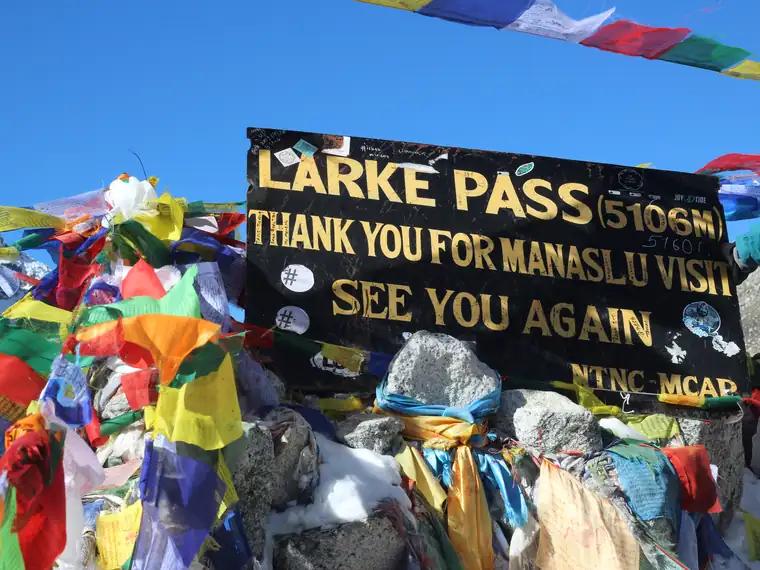
- Cross Larkya La Pass at 5,106 m, then descend to Bimthang.
- This is the circuit’s longest listed walking day, with a substantial descent after the pass.
- Walking distance: 23 km | Duration: 8 hours
- Ascent: 650 m | Descent: 1,406 m
Included meals: Breakfast, lunch and dinner with tea or coffee.
Bimthang to Tilje (2,300 m)
- After breakfast, continue from Bimthang to Tilje.
- The route descends into the lower part of the valley.
- Walking distance: 21 km | Duration: 7 hours
- Ascent: 170 m | Descent: 1,510 m
Included meals: Breakfast, lunch and dinner with tea or coffee.
Tilje to Pokhara (822 m) / Kathmandu (1,350 m)
- Leave Tilje by road for Pokhara or Kathmandu, according to your agreed itinerary.
- The outline lists a separate driving option for each destination.
- Drive distance: 230 km, 9–10 hours
- Drive distance: 210 km, 8–10 hours
Explore Pokhara
- Spend the day exploring Pokhara if you have chosen the Pokhara return route.
Drive to Kathmandu (1,350 m) then transfer to the hotel
- Travel by road from Pokhara to Kathmandu, then transfer to your hotel.
- Road Distance: 200 km
- Drive duration: 8–9 hours
Rest day or explore Kathmandu city
- Rest after the trek or spend time exploring Kathmandu.
Departure
- Your trip ends with an included airport transfer for your departure.
- Best season
- Spring (March–May) and autumn (September–November)
- Trek start and finish
- Kathmandu
- Permits
- Manaslu Conservation Area Project, Special Restricted Manaslu Area Permit and Annapurna Conservation Area Permit
Who is the Manaslu Circuit Trek for?
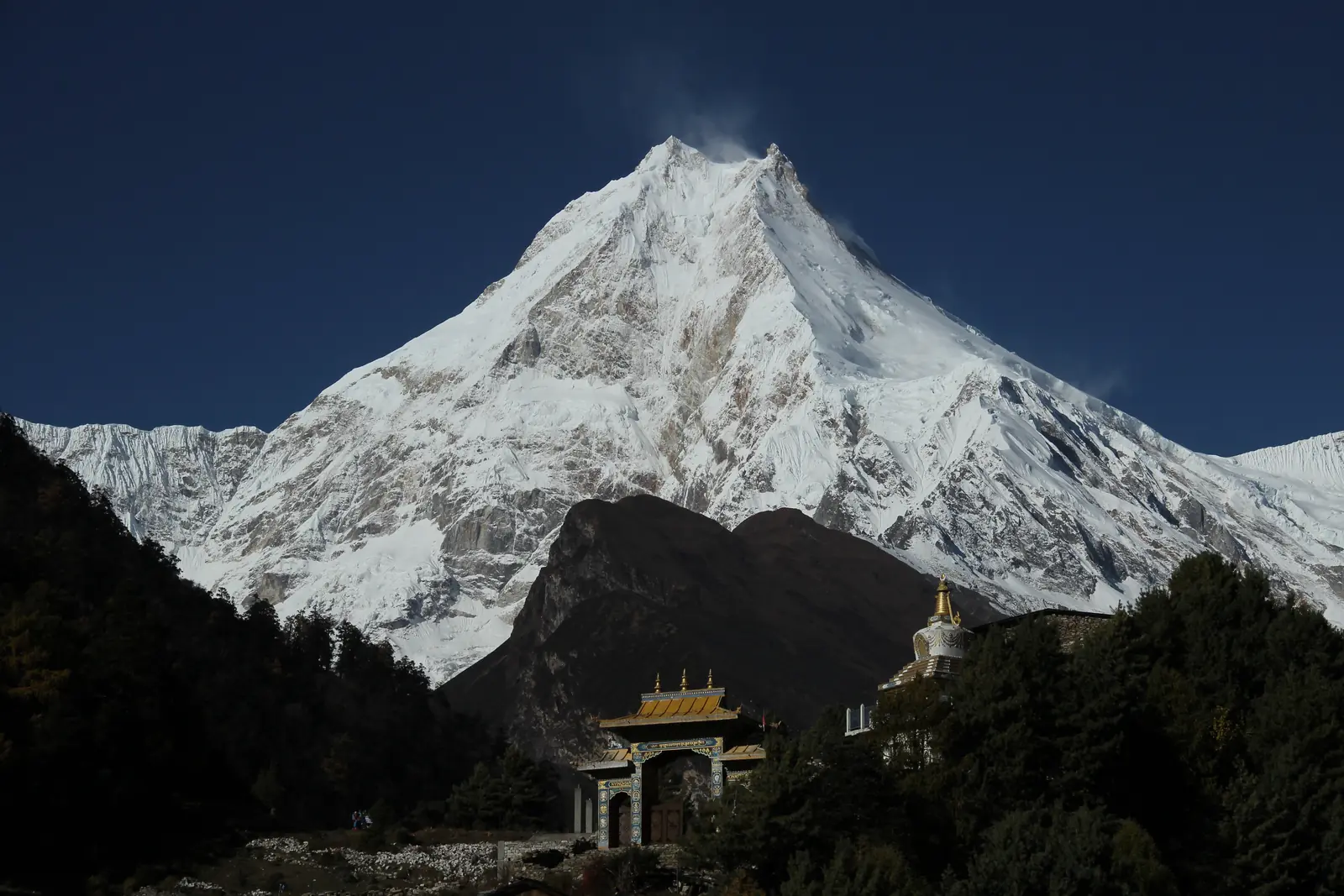
Manaslu takes you around Mount Manaslu, the eighth-highest mountain in the world, through a landscape that changes dramatically as you travel deeper into the Himalayas.
We recommend the Manaslu Circuit to travelers who want to experience dramatic mountain scenery, Himalayan culture, traditional villages, and a more remote trekking experience away from some of Nepal's busiest trails.
Why Manaslu?
For the traveler who wants:
- Incredible views of Manaslu and the surrounding Himalayas
- A journey through changing landscapes, from green valleys to high mountains
- Traditional Himalayan villages and mountain communities
- Buddhist monasteries, prayer flags, mani walls, and Tibetan influenced culture
- A challenging high-altitude trekking experience
- The experience of crossing Larkya La Pass
- A quieter and more remote feeling compared with some of Nepal's classic trekking routes
Manaslu is for those who want to go beyond simply checking a famous mountain off their list and experience the journey, the people, the culture, and the landscapes along the way.
More about this trek
Route highlights
- The Manaslu Circuit Trek unfolds in the northern part of the Gorkha district in the western central region of Nepal, requiring a special restricted area permit and an additional Annapurna Conservation Area Permit (ACAP).
- This transformative journey spans 12 to 16 days, depending on the chosen itinerary and side trips.
- Commencing and concluding in Arughat or Soti Khola, but these days possible to reach to Machhakhola.
- The trek winds through diverse landscapes, remote villages, and lush forests, offering panoramic views of Manaslu, Ganesh Himal, and other peaks.
- With altitudes exceeding 5,000 meters at the challenging Larkya La Pass, the itinerary incorporates ample acclimatization days.
- Best enjoyed in spring (March to May) or autumn (September to November), the trek presents challenges, notably at Larkya La Pass, yet rewards with breathtaking views and diverse landscapes.
- Prior trekking experience and good physical fitness are recommended.
Culture and communities
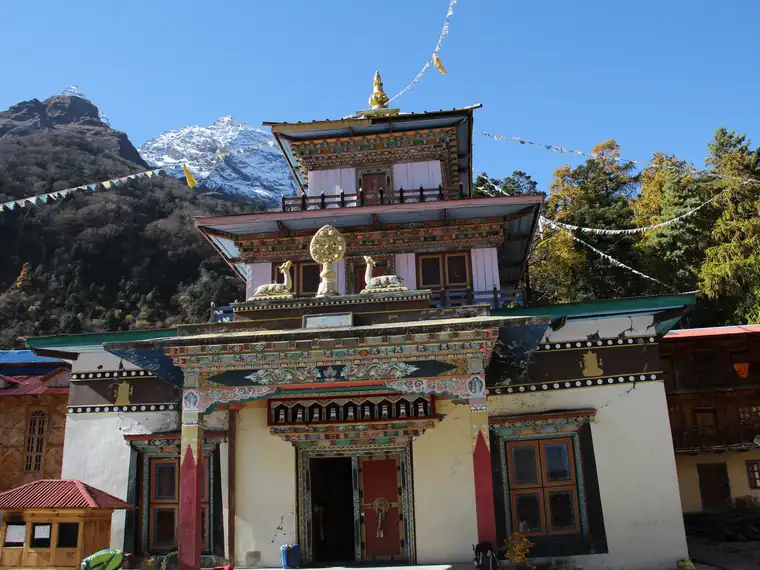
- Cultural immersion is integral, traversing Tibetan-influenced villages like Samagaon and Samdo, adorned with ancient Buddhist monasteries and Mani walls.
- Teahouses provide accommodations, showcasing local hospitality.
Highlights of the Manaslu Circuit
- The Manaslu region captivates with its awe-inspiring natural beauty, featuring lush forests, meandering rivers, and a rich tapestry of flora.
- This area is home to a welcoming community and boasts a culturally diverse blend of Nepalese and Tibetan ethnic groups.
- Gaze upon the majestic Samdo Peak, offering sweeping vistas of towering mountains and a glimpse into Tibet.
- Marvel at the panoramic spectacle of some of the world's loftiest peaks, including Manaslu, Himlung Himal, and Annapurna II.
- Encounter a thriving ecosystem teeming with wildlife, from the agile Tahr and elusive Snow Leopard to the endearing argali, Pika, and Himalayan Marmots.
What is included
Cost includes
- Airport transfers
- 4 nights in a boutique hotel in Kathmandu
- 3 nights in a boutique hotel in Pokhara
- Basic accommodation in shared twin rooms during the trek
- Kathmandu to Machha khola by private Jeep
- Tilje to Pokhara by private Jeep
- Pokhara to Kathmandu by tourist bus / private vehicle
- Three meals (Breakfast, Lunch and Dinner)
- Tea or coffee
- Filtered natural drinking water during the trek
- English-speaking government-certified trekking guide
- Porter service (each porter will carry a maximum of 20 kg)
- Staff costs include: insurance, equipment, food, transportation and accommodations during the trip
- All necessary paperwork: Manaslu special permit, Manaslu Conservation Area Project (MCAP) Annapurna conservation area project Permits (ACAP)
- All government and local taxes
- First aid medical kit
- HGT will plant trees equivalent to the amount of pollution generated during the trip.
- Duffel bag use for trekking purpose
- Save The Mountains eco bag
- Appreciation certificate
Cost excludes
- Personal trekking equipment
- International flights, passport, and visa fees
- Travel insurance (Travel cancellations, accidents, health emergency, evacuation and theft of or damage to personal belongings)
- Personal expenses such as extra meals, alcoholic beverages, soft drinks, tea, coffee, mineral water, hot water, hot packs, hot shower, WiFi service, mobile charging camera charging etc.
Trek essentials
Accommodation
- The Manaslu region offers simple rooms with shared toilets and bathrooms.
- Teahouses in Dharmasala are very basic. When there are many visitors, guests may need to share rooms. Rooms for men and women are separate.
Food and drinks
- The Manaslu region provides a variety of national and international cuisine.
- Along your trek, you'll find simple cafes and restaurants offering a variety of hot drinks to enhance your experience.
Food safety
(Important note on consuming non-vegetarian food in the Manaslu region)
We don’t discourage eating meat during your trek in Nepal; we do care about your health and safety. In the Manaslu region, there is no direct road access to most trekking areas. This means meat must be carried by local porters or animals from lower valleys, which can take 3–7 days to reach higher altitude tea houses. If you wish to try non-vegetarian food, we recommend trying in Machhakhola, Jagat, Va Bhimthang, Tilje and Besi Sahar, where the supply route is shorter (2–3 days), and the meat is generally fresher.
Phone and Wi-Fi
- Most areas along the route offer Wi-Fi service, but phone network coverage can be limited.
- We recommend getting a local SIM card so you can use your own phone for network and internet access whenever possible.
- However, the internet and phone service are limited between Dharmasala and Bhimthang.
Travel and flight delays
To supply
To supply
Safety and rescue
To supply
To supply
Tipping
Tipping in Nepal is not mandatory, but it is widely appreciated, especially in the tourism and service sectors. In restaurants, hotels, and other hospitality services, tipping is generally viewed as a gesture of gratitude for good service rather than an obligation. Many restaurants, particularly in urban areas, may include a service charge in the bill; in such cases, additional tipping is entirely optional.
In trekking and adventure tourism, tipping guides, porters, and support staff is customary and often contributes significantly to their overall income. Tips are typically given at the end of the trek and are usually collected as a group and distributed among the trekking team. The amount may vary depending on the duration of the trek, group size, and quality of service, and is commonly calculated on a per-day, per-staff-member basis.
In our case, our staff members are fairly compensated; however, tips are always appreciated as a kind acknowledgment of their effort and support.
Gear and clothing
- Rain jacket or poncho
- Gore-Tex jacket
- Trekking poles
- Trekking boots
- Crampons
- Gloves (recommended for -15°C)
- Dry towel
- Warm pants for evening and morning
- T-shirts
- Long-sleeved shirt
- Warm hat
- Cap
- Neck gaiter (Buff)
- Thermal set
- Light shoes or sandals
- Fleece jacket
- Down jacket
- Down sleeping bag (recommended for -15°C)
- Daypack and bag cover
- Reusable water bottle
- Solar charger
- Sunglasses
- Headlamp and extra batteries
Personal items
- ATM card and extra money for external expenses (food and drinks)
- Personal beauty care kit
- Personal medicines
- Toiletries
Waste and responsible travel
- By simply following the “Pack In, Pack Out” principle with Himalayan Green Trips, carrying out what you bring in, you are already making a meaningful contribution to preserving the mountains.
- Imagine that your journey is more than just a trek; it’s an opportunity to create a positive impact. By helping care for the trails and mountains, you become part of a meaningful effort to protect the Himalayas. Together, we can preserve this extraordinary landscape and ensure it remains a pristine and inspiring destination for generations to come.
On every trip
- Need to follow the pack in and pack out principle.
- Leave only footprints on the mountain.
- Do not bring single-use plastic bags on the trek.
- Priority is drink natural water, filter, boiled water.
- Bring your own reusable water bottle.
- Carry out whatever you buy in the mountains.
- Clean up the trekking trails if possible.
- Carry out 1 kg of recyclable waste from the mountains to the city for the city to reduce mountain pollution.
- Support the Let's Clean Up Nepal Green initiative by spreading an environmental message by displaying posters at guesthouses and educating guides, porters, trekkers, and locals, etc.
Your quote will include the route, itinerary, price, and what is included or excluded. We can also arrange camping treks and tailor an itinerary to your preferences.
All travel plans and itineraries are based on the pack in and pack out principles.